

Why Visit Fengdu Ghost City on a Yangtze River Cruise
Located along the Yangtze River near Chongqing, Fengdu Ghost City is one of the most distinctive cultural stops on a Three Gorges cruise. Known as the "City of Ghosts," this historic site blends mythology, Taoist philosophy, and centuries of folklore into a dramatic riverside experience. Perched on Mingshan Hill overlooking the Yangtze, Fengdu Ghost City offers travelers a unique look at traditional Chinese beliefs about the afterlife. Its temples, statues, and symbolic trials make it one of the most memorable and visually striking destinations along the river
The Legend of the "Ghost City"
Taoist Origins and the Underworld Mythology
Fengdu's reputation dates back to the Han Dynasty (206 B.C. - 220 A.D.), when two officials, Yin and Wang, became Taoist hermits on Mingshan Mountain. Over time, folklore combined their names to resemble "King of the Underworld," linking the town to Chinese beliefs about the afterlife. As Taoist traditions evolved, Fengdu became symbolically associated with Diyu - the realm of judgment and spiritual trials after death. Temples were built to represent different stages of the underworld, turning the mountain into a spiritual and theatrical representation of moral justice.
Journey to the West and Literary References
Fengdu Ghost City gained further fame through classical Chinese literature, including Journey to the West and Strange Stories from a Chinese Studio. These works helped cement its identity as the mythical entrance to the underworld.
Today, the site reflects this layered history of religion, storytelling, and cultural imagination.
What to See at Fengdu Ghost City
Mingshan Hill Temples
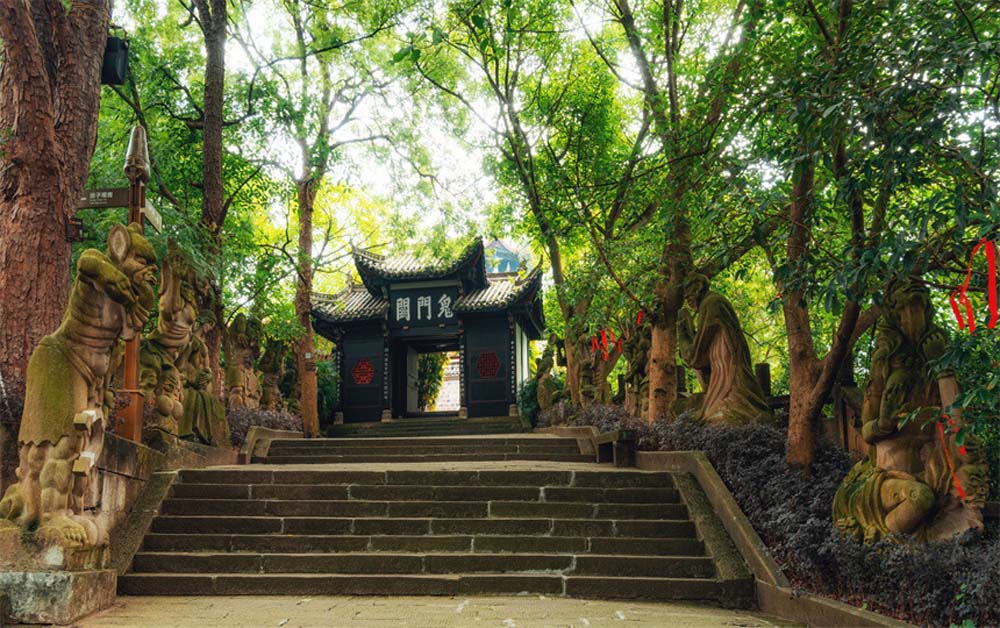
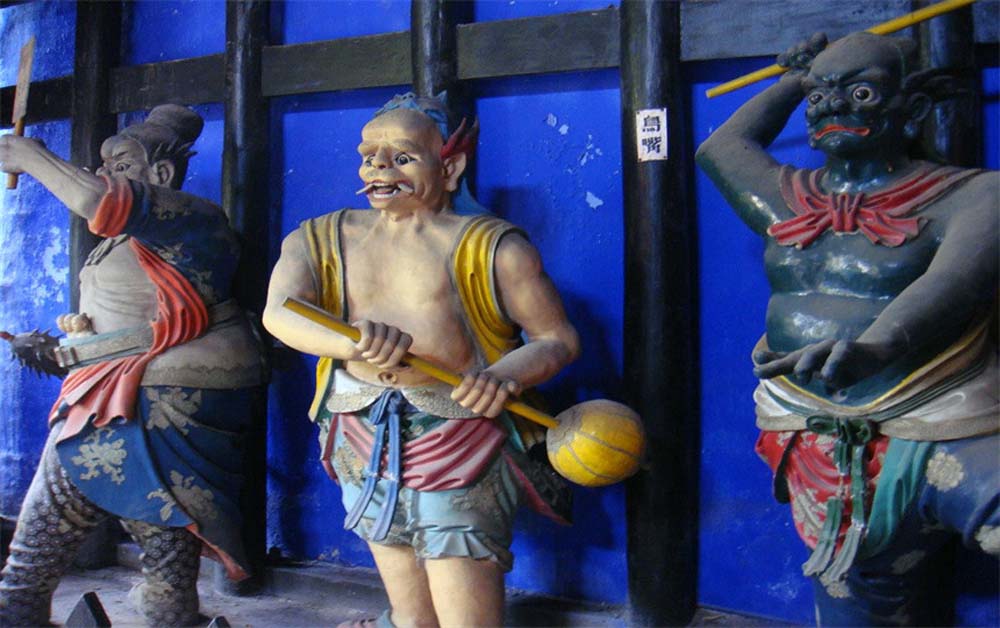
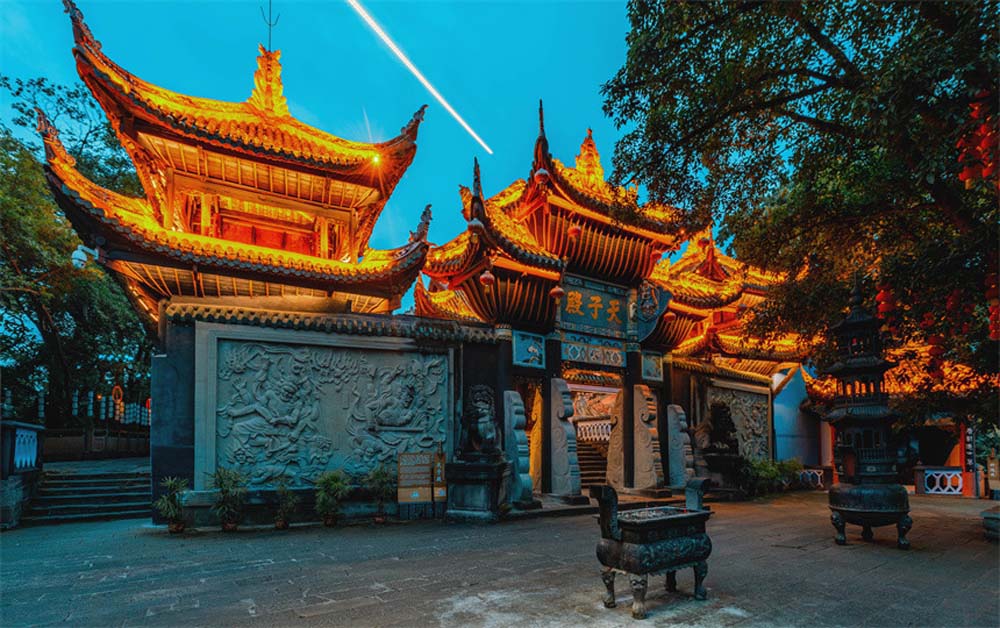
The main complex sits atop Mingshan Hill, where temples and shrines dedicated to underworld deities overlook the Yangtze River. Statues depict judges, demons, and mythological figures responsible for determining the fate of souls.
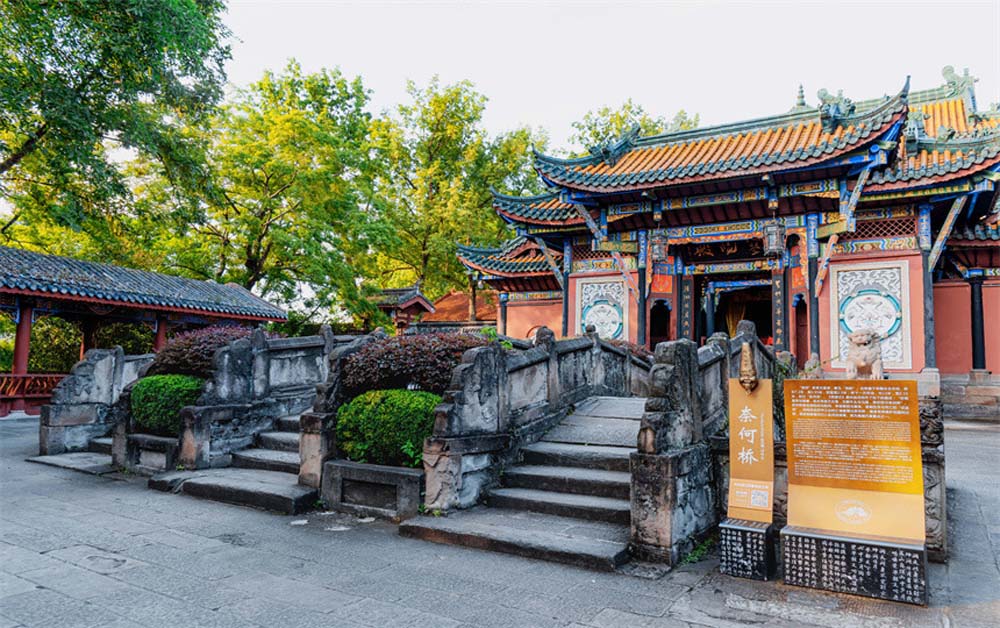
Nothing-to-be-Done Bridge
This symbolic stone bridge represents moral testing. According to legend, only virtuous souls can cross it safely.
Ghost Torturing Pass
One of the most dramatic areas of the site, this section features statues and carvings representing punishments awaiting wrongdoers in the afterlife.
The Three Trials of the Underworld
Visitors pass through symbolic "trials" that represent judgment, balance, and moral accountability - themes deeply rooted in Chinese spiritual philosophy.
Fengdu Ghost City Tours from Chongqing
Fengdu Ghost City is typically visited as a shore excursion during Yangtze River cruises between Chongqing and Yichang. The stop allows travelers to explore Mingshan Hill on foot with guided commentary explaining the mythology, symbolism, and historical context.
As part of a Three Gorges cruise, Fengdu offers a cultural contrast to the dramatic landscapes of Qutang Gorge, Wu Gorge, and Xiling Gorge. Its blend of folklore and history makes it one of the most unique stops along the Yangtze.
Frequently Asked Questions About Fengdu Ghost City
Where is Fengdu Ghost City located?
Fengdu Ghost City is located in Chongqing Municipality along the Yangtze River, approximately 170 kilometers from downtown Chongqing.
Is Fengdu Ghost City included in Yangtze River cruises?
Yes. Fengdu Ghost City is a common excursion stop on Yangtze River cruise itineraries between Chongqing and Yichang.
Is Fengdu Ghost City scary?
Despite its name, Fengdu Ghost City is not a horror attraction. It is a cultural and mythological site that represents traditional Chinese beliefs about morality and the afterlife.
How long do cruise excursions last?
Most shore excursions to Fengdu Ghost City last approximately 2-3 hours, depending on the cruise itinerary.
Why is Fengdu called the Ghost City?
The name comes from Taoist legends and literary traditions that associated Mingshan Hill with the King of the Underworld and the spiritual realm of judgment after death.