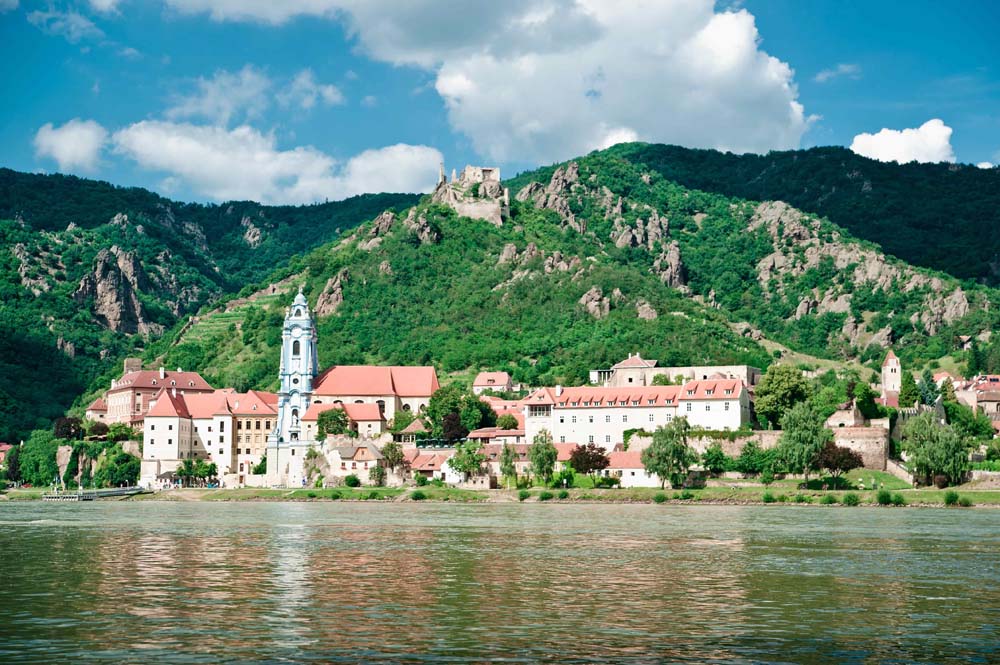


Dürnstein may be small, but it’s one of the Wachau Valley’s most memorable river stops—vineyard slopes, Danube views, and a storybook village silhouette that feels made for an unhurried walk. This is a destination where atmosphere matters as much as any single landmark, which is why it shines on an itinerary in Austria.
On the ground, Dürnstein is strongest for travelers who want well-known signature sights, fortified history, and old-world viewpoints. It’s also an easy place to enjoy tourist destinations in Dürnstein without needing a complex plan or long transfers.
Why Visit Durnstein
Dürnstein works well because it naturally offers more than one pace in the same stop. You can start with a headline viewpoint or historic site, then slow down with village lanes, a riverside pause, or a nearby church visit.
That balance matters on a Century itinerary, where the best time ashore feels focused rather than overloaded.
Top Things to Do in Durnstein
Durnstein Castle
Durnstein Castle brings views, fortification history, and a strong sense of place together in one stop. It often works best when you allow time for both the setting and the structure itself.
Kremser Tor
Above the village, Dürnstein Castle ruins reward the climb with sweeping Wachau Valley panoramas and a strong sense of medieval fortification history. The experience is as much about the setting—vineyards, river bends, and open sky—as it is about the structure itself. Give yourself time to enjoy both the walk up and the viewpoint moments at the top.
Pfarrkirche Unterloiben
Walking through Kremser Tor is one of those small experiences that instantly places you in the village’s historic rhythm. The gate frames the old town and works best when you treat it as part of a slow stroll rather than a quick photo stop. Pair it with time in the nearby lanes or a café pause and it becomes a simple, satisfying highlight.
How Durnstein Fits into a Broader Itinerary
For most travelers, Dürnstein is best handled with a simple structure: one headline stop in the morning, a second lighter activity later in the day, and room for meals or wandering in between. That pacing keeps the experience comfortable, especially when Dürnstein is only one part of a longer itinerary.
Why Simplicity Works Here
Dürnstein is usually better when it stays simple.
- One main landmark,
- One scenic walk or village moment,
- And a bit of free time.
That combination often creates a stronger memory than packing in extra stops. Smaller destinations gain their value from atmosphere—and that atmosphere disappears quickly when every minute is preassigned.
Travel Planning Notes
Most travelers get more from Dürnstein when they keep one part of the day flexible.
- Helps with weather or a slower walking pace on uphill routes
- Allows extra time at a viewpoint
- Gives the option to linger somewhere that feels especially beautiful
In practice, flexibility is often the difference between a stop that feels efficient and one that feels genuinely enjoyable.
Final planning note: Dürnstein almost always performs better as a selective stop than an exhaustive one—prioritize what matters most, set your own pace, and let the day take shape.
Frequently Asked Questions
How much time does Durnstein usually need?
A focused visit is often enough, especially if you keep the plan simple and stay centered on the historic core or main landmark.
Why does Durnstein work well on a larger itinerary?
Smaller towns often add atmosphere and breathing room. They can reset the pace between bigger cities without feeling like a throwaway stop.
What is the best way to experience Durnstein?
Walk it at a measured pace, prioritize the main landmark or viewpoint, and leave a little time for cafes, local shops, or a scenic pause.